The early eye
In Avel’s family, crystal and porcelain were almost an obsession. She remembers them laid out for meals, part of the care given to the table. Through her mother’s magazines and imported pieces in local shops, she became familiar with major crystal and porcelain brands.
Ljubljana and the family home
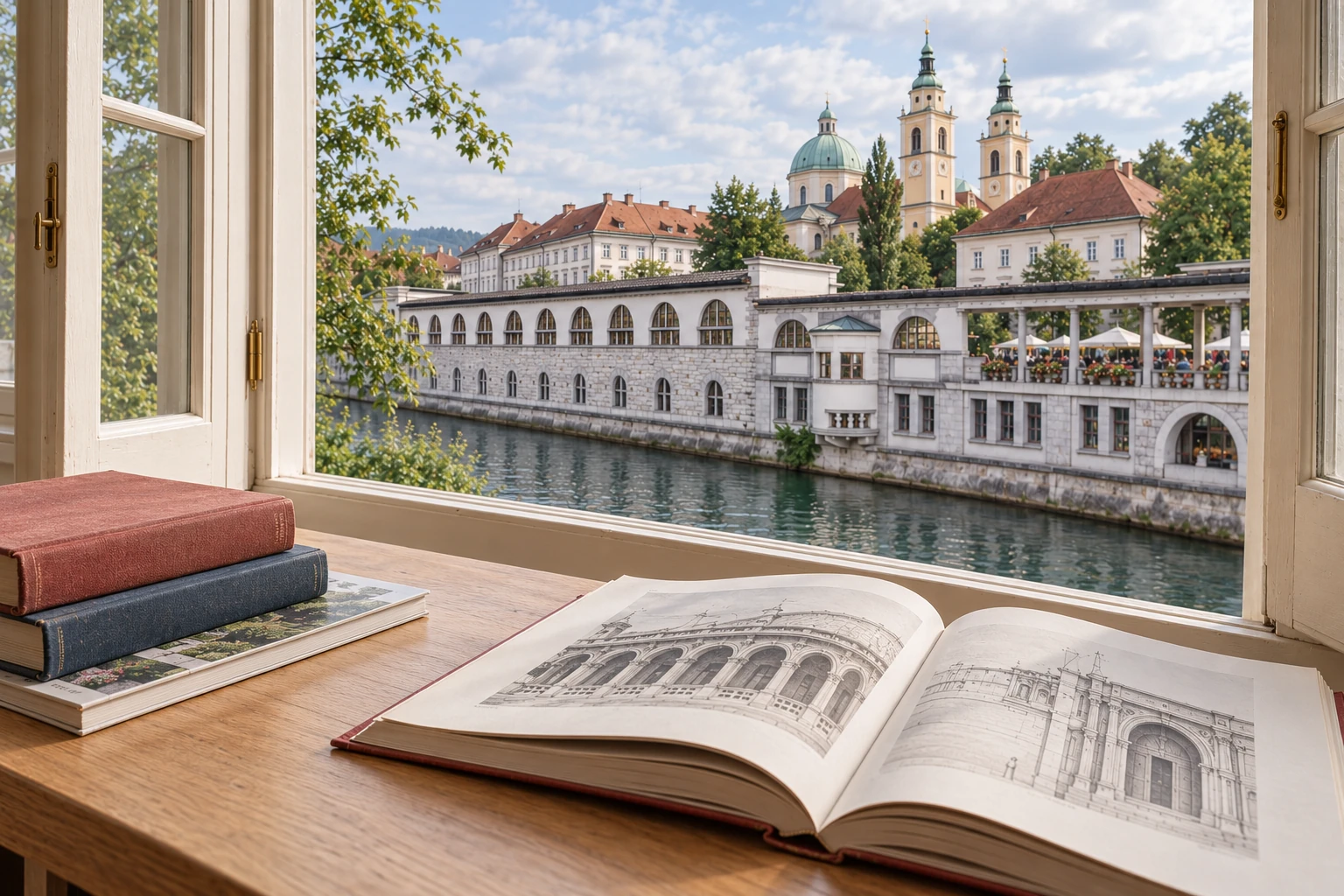
Jože Plečnik’s architecture was part of daily life in Ljubljana. She remembers its lines, stone and structure, and a balance she still values: modernity without arrogance, restraint with a strong physical presence.
Most of her relatives worked in medicine. Music was always present at home. Piano and ballet were part of her upbringing.
She also remembers occasional visits to an uncle’s studio. An artist and graphic designer, he shared the space with an architect. The drawings and images stayed with her, even though those visits were brief.
Her mother worked as a nurse in a military hospital. At home, she collected hundreds of magazines and hundreds of books on gardens, architecture, interiors and art. She knew how to paint, though rarely had enough time. Gardening and respect for nature mattered to her.
Reserved in temperament, her mother sometimes surprised Avel with an observation or a connection between things. Avel believes this influenced the way she notices both the structure of a space and its smallest details.
Taking things apart, setting a table
As a child, Avel took objects apart to understand what happened underneath. A simple explanation often left her with another question.
At a school friend’s birthday party, a computer held her attention after the other children had gone off to play. Spaceships crossed the screen. She watched it respond to the controls, absorbed by the relationship between a movement and its visible effect. She left wanting a computer of her own.
Food became another interest. She enjoyed cooking and sought out unfamiliar places to eat. She remembers noticing how a table was set long before she had words for it.
A job in Stuttgart took her abroad. In Germany, social invitations often meant dinner in someone’s home. The preparations and rituals of the table occupied the center of an evening. Avel came to value this form of hospitality and adopted it when welcoming people herself.
What she kept
Among the things Avel kept were notes and small gifts, valued for the person or occasion connected with them. They gave her surroundings a history she recognized.
Many of her mother’s books and magazines later passed to her. She sees an inheritance in the interests they shared. She also wanted to see how other people lived, and was willing to leave home to find out.
Her mother’s collection has a place in her home now. So do the things she went out into the world and chose for herself.